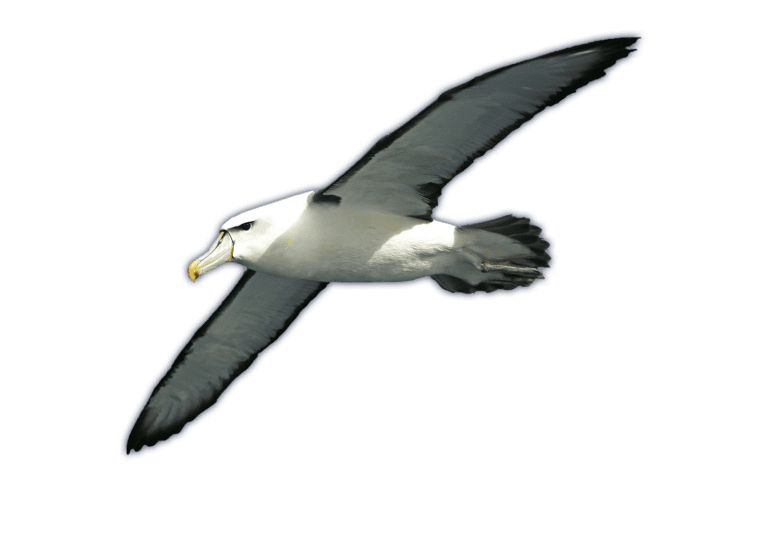
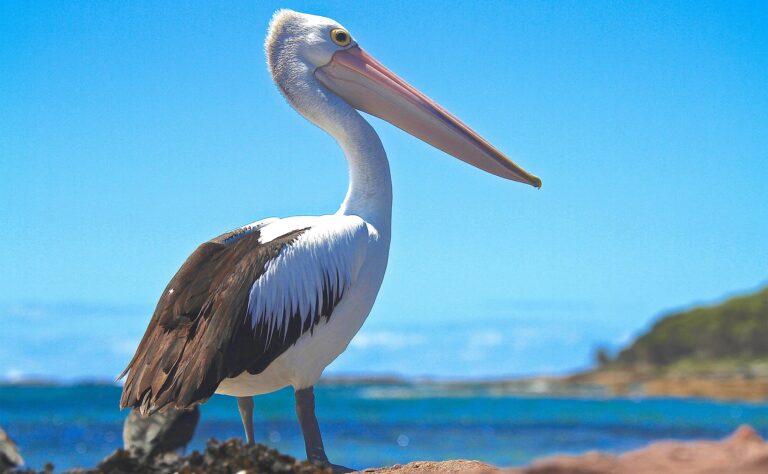
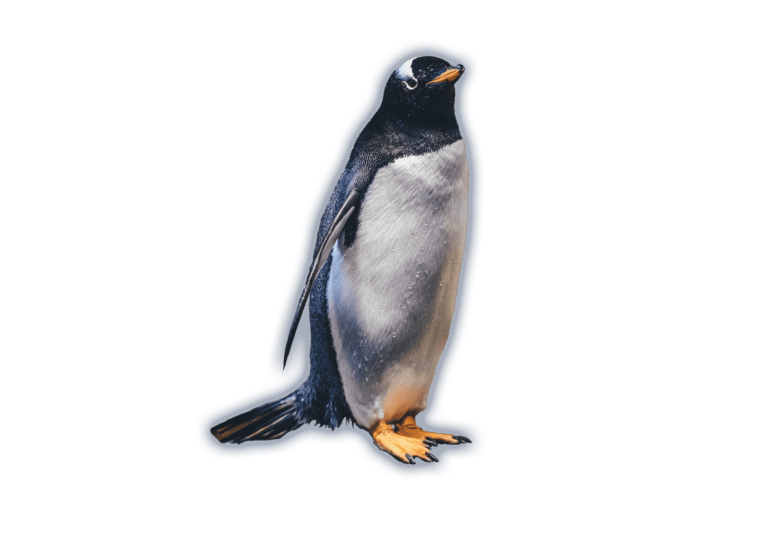
Tropicbirds are dazzling white seabirds with two long, ribbon-like tail feathers streaming out behind them. The red-billed tropicbird pictured has a body about 19 inches (48 cm) long, tail streamers that can add another 20 inches (50 cm), a wingspan of 3.3 feet (1 m) and a weight of about 1.5 lbs (700 g).
Their plumage is satin white with fine black barring on the back and a black eye stripe, and the bill is coral red. The legs are set far back and are so short that a tropicbird can barely shuffle on land, pushing itself along on its belly.
Sailors called them bosun birds, because their shrill whistle sounds like a boatswain's pipe.
Tropicbirds live over warm tropical and subtropical oceans around the world, often hundreds of miles from land. The red-billed tropicbird breeds on cliffs and rocky islets in the Caribbean, the eastern Pacific including the Galapagos, the tropical Atlantic and the Red Sea and Arabian Sea.
They nest in crevices, ledges and holes where they can take off straight into the wind.
Tropicbirds eat flying fish and squid, which they catch by plunge-diving from 60 feet (20 m) or more, often far out to sea. They hover briefly over the target before folding their wings and dropping in.
Courting tropicbirds perform aerial displays in pairs or small groups, flying in formation with their streamers raised and swinging. Pairs lay a single egg and both parents incubate it and feed the chick on regurgitated fish.
Away from the colony they are solitary, ranging alone across the open ocean, and they rarely follow ships or mix with other seabirds.
The family Phaethontidae has three species: the red-billed, white-tailed and red-tailed tropicbirds. They are not closely related to any other living birds and are placed in an order of their own.
The IUCN lists all three as Least Concern. The red-billed tropicbird has the smallest population, perhaps 10,000 pairs, and like the others it suffers where rats and cats have reached its nesting islands.