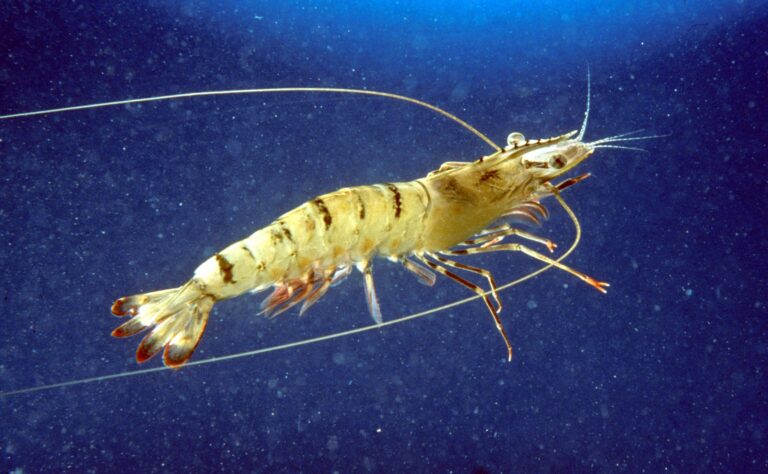
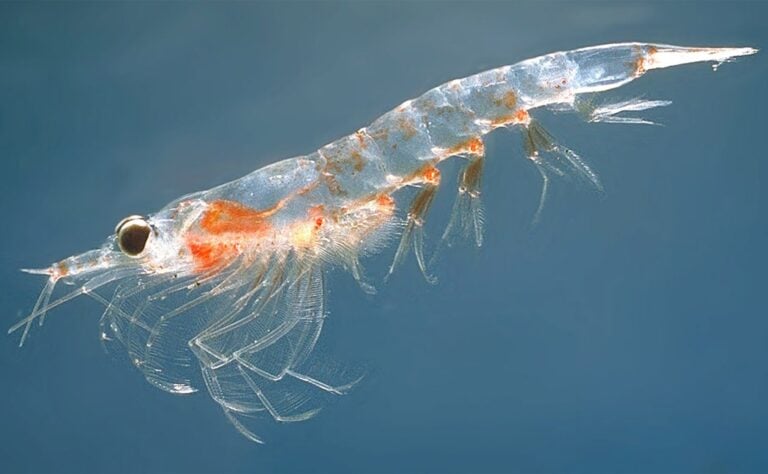
Shrimp are slender, ten-legged crustaceans with long antennae and a fan-shaped tail. There are more than 2,000 species of true shrimp, from tiny glass shrimp under half an inch long to species of 10 inches (25 cm). Their thin shells are often transparent, and a flick of the muscular tail shoots them backwards out of danger.
The red-and-white animal pictured is a Pacific cleaner shrimp, a true shrimp that earns its living picking parasites off reef fish. The colourful peacock mantis shrimp in the gallery below is not a true shrimp at all but a member of a separate group, the stomatopods. Mantis shrimp have the most complex eyes in the animal kingdom and club-like front limbs that strike as fast as a bullet, hard enough to crack aquarium glass.
Most shrimp live only one to two years and molt many times as they grow.
Shrimp live in every ocean and in many rivers and lakes too, from tide pools and coral reefs to the deepest trenches and even around hot hydrothermal vents. Many species spend the day hidden in sand, crevices or among the arms of anemones and corals.
Most shrimp are omnivores and scavengers, eating algae, plankton, small worms, dead animals and whatever scraps they find. Cleaner shrimp set up stations on reefs where fish line up to have parasites picked off their skin and even from inside their mouths.
Mantis shrimp, by contrast, are fierce hunters that smash snails and crabs or spear passing fish.
Shrimp are full of surprises. Snapping shrimp close a special claw so fast that it fires a bubble and a crack of sound loud enough to stun prey; together they are one of the noisiest sounds in the sea. Some snapping shrimp share burrows with goby fish, which act as lookouts.
Cleaner shrimp wave their white antennae to advertise their services, and many deep-sea shrimp glow or spit clouds of light to escape predators.
True shrimp make up the infraorder Caridea, with families ranging from cleaner shrimp and snapping shrimp to the freshwater shrimp kept in aquariums. Prawns, which look similar, are a separate group, and mantis shrimp belong to the order Stomatopoda.
Few shrimp species have been assessed by the IUCN. The main concern is shrimp trawling, which can damage the seabed and catches many other animals along with the shrimp.