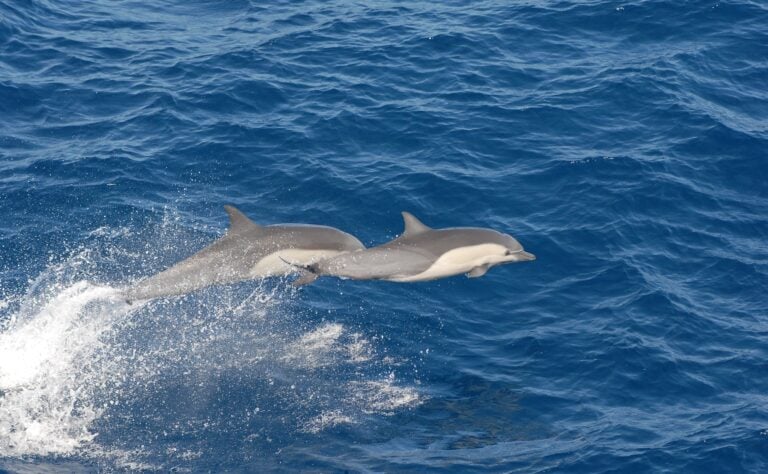
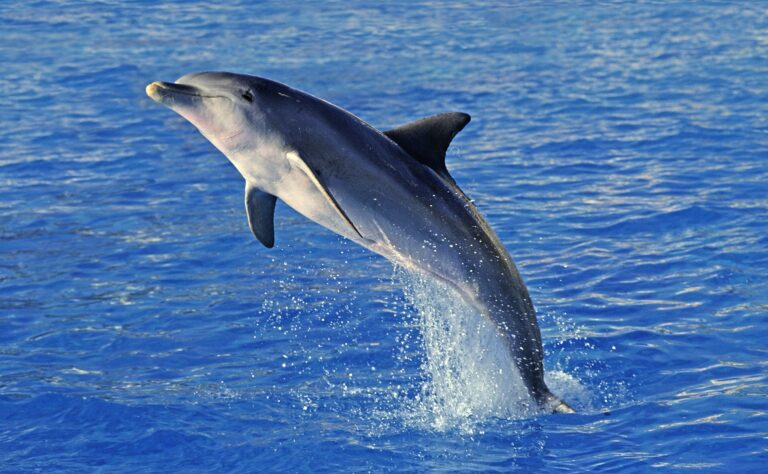
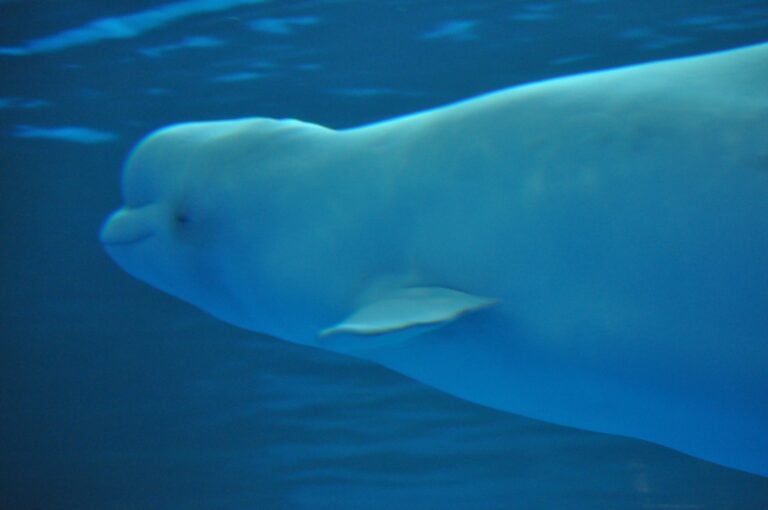
Porpoises are the smallest of all whales and dolphins. The harbour porpoise, the best-known species, is only 1.4-1.9 meters (4.5-6 feet) long and weighs 45-75 kg (100-165 lbs). Porpoises are often mistaken for dolphins, but they are a separate family with a stockier body, a rounded head with no beak, and a small triangular dorsal fin rather than a curved one.
The surest difference is in the mouth: dolphins have cone-shaped teeth, while porpoises have flat, spade-shaped teeth. Harbour porpoises are dark grey on the back fading to white underneath, with a dark stripe running from the mouth to the flipper.
Porpoises live fast and short lives. Most harbour porpoises live 8-13 years, females can give birth every year, and calves nurse for 8-12 months.
The seven porpoise species live in cool coastal waters around the world. The harbour porpoise is found across the North Atlantic, North Pacific and Black Sea, usually in water shallower than 200 meters (650 feet), including bays, estuaries, harbours and tidal channels.
Other porpoises include Dall's porpoise in the North Pacific, the finless porpoises of Asian coasts and rivers, and the vaquita, which lives only in the northern Gulf of California in Mexico.
Porpoises eat small schooling fish such as herring, sprat, sand eels, capelin and small cod, as well as squid. Because they are small and live in cold water, they lose heat quickly and must eat almost constantly, taking in up to 10 percent of their body weight every day.
They hunt using very high-pitched echolocation clicks, far above the range of human hearing, and swallow their prey whole.
Porpoises are shy and easily overlooked. Harbour porpoises travel alone or in groups of two or three, rarely leap, and seldom approach boats. They surface with a quick, rolling motion and a short puffing breath that gave them the old nickname "puffing pig".
Their dives usually last only a few minutes. They are more active at night when their prey rises toward the surface.
Porpoises make up the family Phocoenidae, with seven species: the harbour porpoise (Phocoena phocoena), Dall's porpoise, Burmeister's porpoise, the spectacled porpoise, the vaquita, and the Indo-Pacific and narrow-ridged finless porpoises. They are more closely related to belugas and narwhals than to the oceanic dolphins.
The IUCN lists the harbour porpoise as Least Concern overall, but populations in the Baltic and Black Seas are endangered. The vaquita is the most endangered marine mammal in the world, with only about ten animals left, all threatened by illegal gillnets set for another fish.
Accidental capture in fishing nets is the biggest danger to all porpoises, along with underwater noise, pollution and the loss of prey to overfishing.