Gulls are the familiar, loud, clever birds of every seaside. There are about 50 species, from the little gull at 10 inches (25 cm) to the great black-backed gull at 31 inches (79 cm) with a wingspan of 5.5 feet (1.7 m). The western gull pictured is a large Pacific species, 22-26 inches (55-65 cm) long with a 4.3-foot (1.3 m) wingspan.
Adults of most species are grey and white with yellow or red-spotted bills and webbed feet. Young gulls are mottled brown and can take up to four years to grow their adult plumage, which makes them a famous headache for birdwatchers.
Gulls are long-lived, often reaching 20-30 years in the wild.
Gulls live on coasts all over the world, from the Arctic and Antarctic to the tropics, and many species are just as common on inland lakes, rivers, farmland, landfills and city rooftops. They breed in colonies on islands, cliffs, beaches and marshes, and increasingly on buildings.
Gulls eat almost anything: fish, crabs, worms, insects, eggs and chicks of other birds, dead animals, and human scraps. Some drop shellfish onto rocks or roads to crack them open, and many are skilled thieves, stealing food from other birds and unwary picnickers.
Gulls are among the most intelligent of birds. They patter their feet on wet grass to bring worms to the surface, follow ploughs and fishing boats for easy meals, and learn when and where people feed them.
They nest in noisy colonies, pair for many years and defend their nests fiercely, swooping and screaming at intruders. Their chicks peck at the red spot on a parent's bill to beg for food.
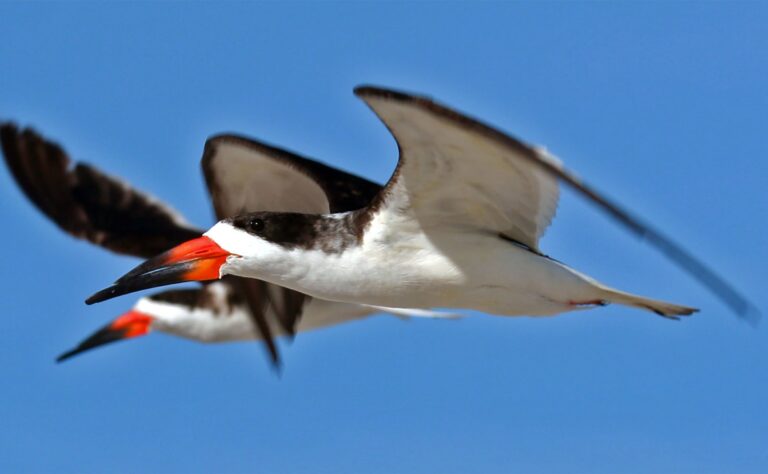
Gulls form the subfamily Larinae within the family Laridae, which they share with terns and skimmers. The IUCN lists most species as Least Concern, including the western gull, but a few are in trouble: the Olrog's gull of South America is Near Threatened and the lava gull of the Galapagos, with only a few hundred pairs, is Vulnerable.
In Britain even the common herring gull is now a conservation concern after large declines at its natural coastal colonies.