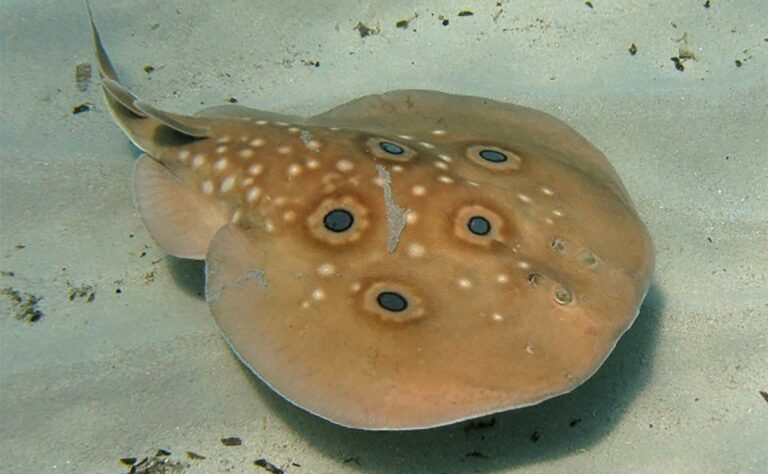
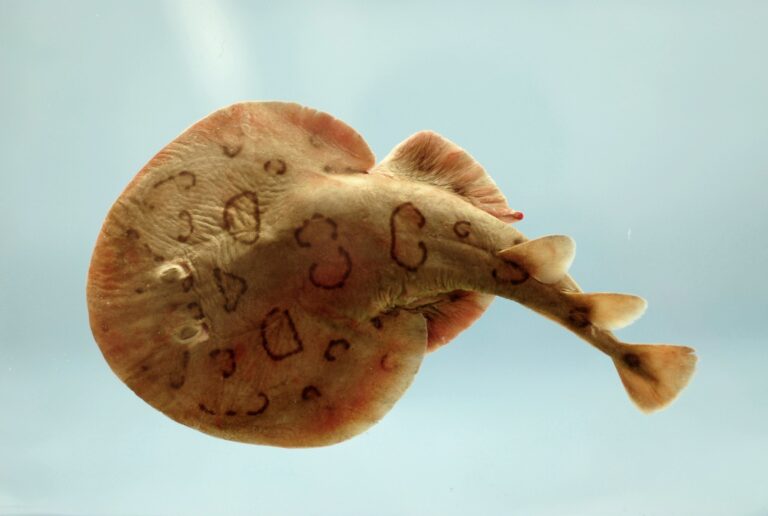
The coffin ray is a small, soft, pear-shaped electric ray found only in Australia. It grows to about 28 inches (70 cm), with a floppy body, tiny eyes and a short tail bearing two small fins. Its name may come from its habit of being found dead on beaches, swollen up like a little coffin, after being stranded by the tide.
Two large kidney-shaped electric organs on either side of the head can deliver a shock of up to 200 volts, strong enough to knock a wader off their feet. The coffin ray's mouth is enormous for its size and stretches to swallow fish almost as long as itself.
Coffin rays live around the southern half of Australia, from Queensland around to Western Australia. They are found on sandy and muddy bottoms, in seagrass beds and around reefs, from the shallows of beaches and bays down to about 790 feet (240 m).
Coffin rays are ambush hunters that eat fish, crabs, worms and even small penguins and rats that have been found in their stomachs. They stun prey with an electric shock and swallow it whole, head first.
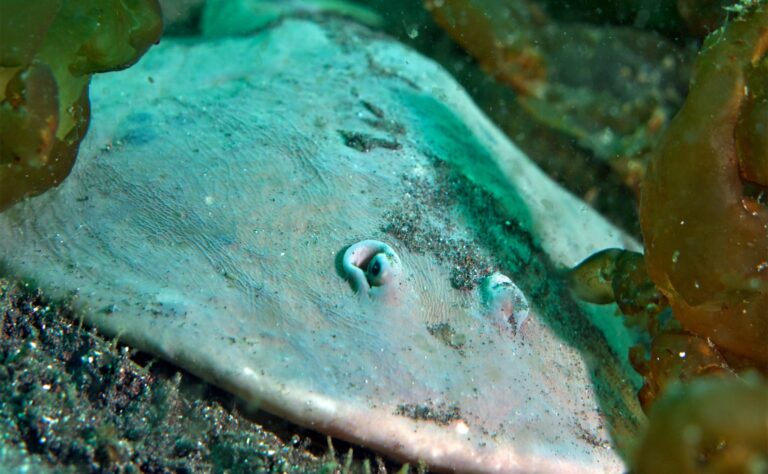
By day a coffin ray lies buried in sand with only its eyes and spiracles exposed. When a fish settles nearby it lunges, wraps its disc around the prey and shocks it. Divers who touch one get a sharp jolt.
They are sluggish swimmers and can survive out of water for hours, which is why they turn up alive on beaches. Females give birth to four to eight live pups.
Hypnos monopterygius is the only species in its family, Hypnidae, and is sometimes placed with the torpedo rays. The IUCN lists it as Least Concern. It is of no commercial value and is usually returned to the sea when caught, though it is taken as bycatch in trawls.