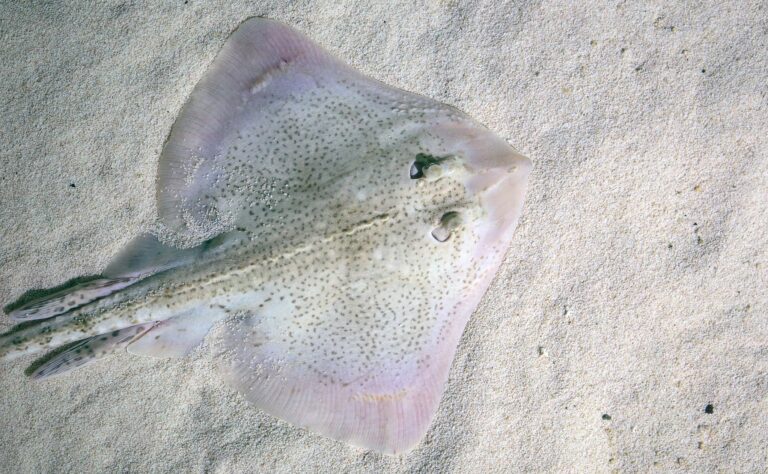
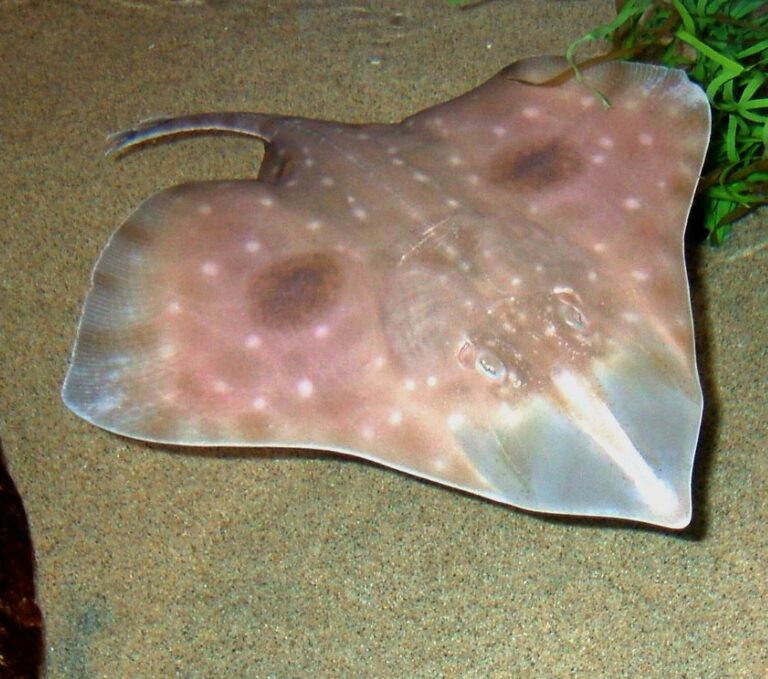
The common skate is the largest skate in the world and, despite its name, one of the rarest. Scientists now know it is two species: the flapper skate, which can reach 9.4 feet (2.85 m) long and 220 lbs (100 kg), and the smaller blue skate. Both are diamond-shaped with a long pointed snout, a row of thorns down the tail and olive-grey backs sprinkled with pale spots.
The eyes, pictured in close-up, sit on top of the head with a frilled flap of skin that shades them from above. Behind each eye is a spiracle, an opening that draws in water for breathing while the skate lies buried in sand.
Common skates grow slowly and do not breed until about 11 years old, which is why they have been so badly hit by fishing.
Common skates once lived across the whole north-east Atlantic, from Norway and Iceland south to Senegal and into the Mediterranean, on sand, mud and gravel bottoms from about 100 to 2,000 feet (30-600 m). Today they survive mainly in deeper water off western Scotland, Ireland, Norway and the Celtic Sea.
They eat crabs, lobsters, shrimp and a wide range of fish, including other skates and small sharks. Large skates hunt in open water as well as on the bottom.
Common skates lie on the seabed by day and hunt mostly at night. Females lay large leathery egg cases, up to 10 inches (25 cm) long, one embryo to a case, which take more than a year to hatch. A single female may lay only about 40 eggs a year.
Tagging shows that many skates stay in the same area for years, which makes local protection effective.
The common skate was split in 2010 into the blue skate (Dipturus batis) and the flapper skate (Dipturus intermedius). The IUCN lists both as Critically Endangered. The species disappeared from the Irish Sea and most of the North Sea during the twentieth century, mainly as bycatch in bottom trawls.
It is now illegal for European fishing boats to land them, and a marine protected area in the Scottish sea lochs protects an important flapper skate nursery.