Frigatebirds are built for the air like no other seabird. The magnificent frigatebird pictured has a wingspan of 7-8 feet (2.1-2.4 m) on a body 35-45 inches (89-114 cm) long, yet it weighs only 2.5-3.5 lbs (1.1-1.6 kg), the lightest body for its wingspan of any bird. Its long, deeply forked tail works like a rudder.
Males are glossy black with a red throat pouch that they inflate like a balloon to attract females; females have a white breast. Their feathers are not waterproof and their legs are tiny, so frigatebirds cannot swim or take off from the water and must catch everything on the wing.
Sailors called them man-o'-war birds for the way they attack other birds.
Frigatebirds live over tropical and subtropical oceans around the world. They nest in colonies in low trees and mangroves on islands, including the Galapagos, the Caribbean, the Pacific atolls and the coasts of Mexico and Brazil.
Between breeding seasons they range far out over the open ocean.
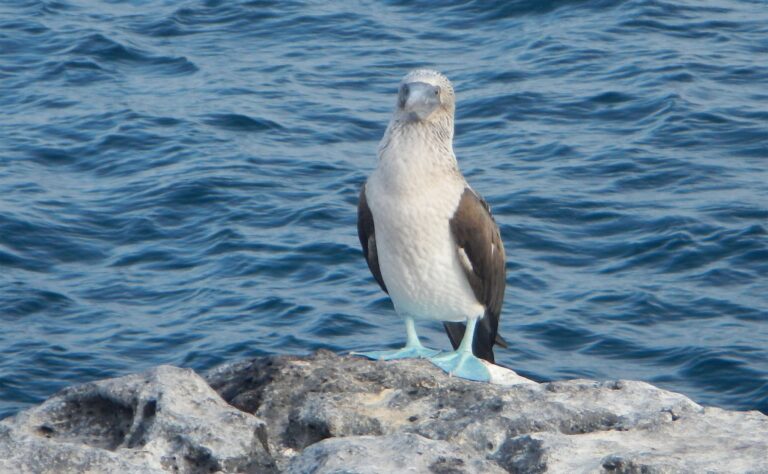
Frigatebirds snatch flying fish and squid from the air and the surface without getting wet. They are also pirates: they chase boobies, tropicbirds and gulls, grab them by the tail and shake them until they drop or cough up their catch, then swoop to catch the meal before it hits the water.
Frigatebirds can stay aloft for weeks, riding air currents up to 2.5 miles (4 km) high and dozing on the wing, sleeping with half the brain at a time. Studies have tracked them flying for two months without landing.
They raise one chick at a time, and because the chick is fed for a year or more after it flies, parents can breed only every other year. Males gather in groups to inflate their red pouches and drum on them with their bills to court females flying overhead.
There are five frigatebirds in the genus Fregata: the magnificent, great and lesser frigatebirds, which are widespread, and the Ascension and Christmas Island frigatebirds, which each breed on a single island. The IUCN lists the magnificent frigatebird as Least Concern and the Ascension and Christmas Island species as Vulnerable.
Nesting habitat loss, introduced predators and fishing pressure on their prey are the main threats.