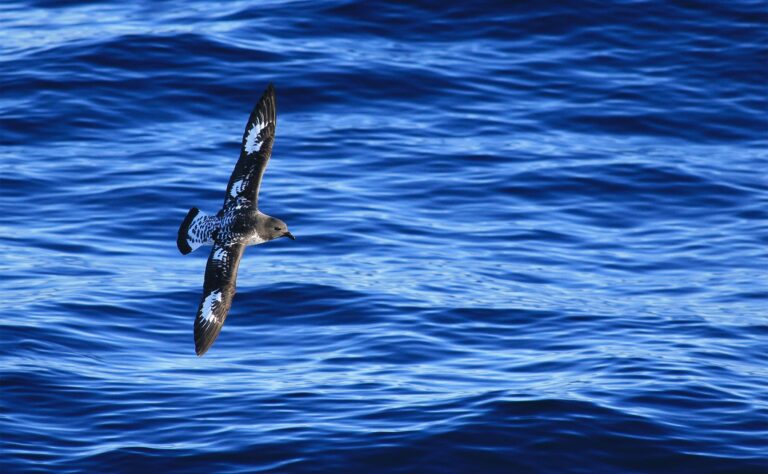
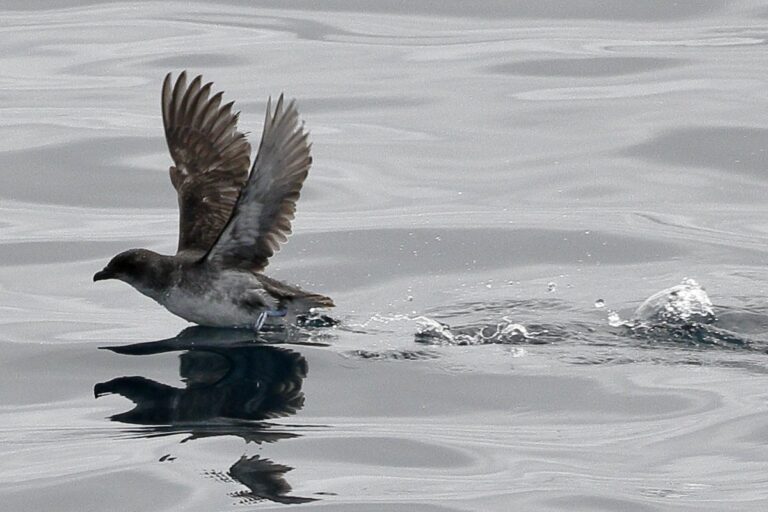
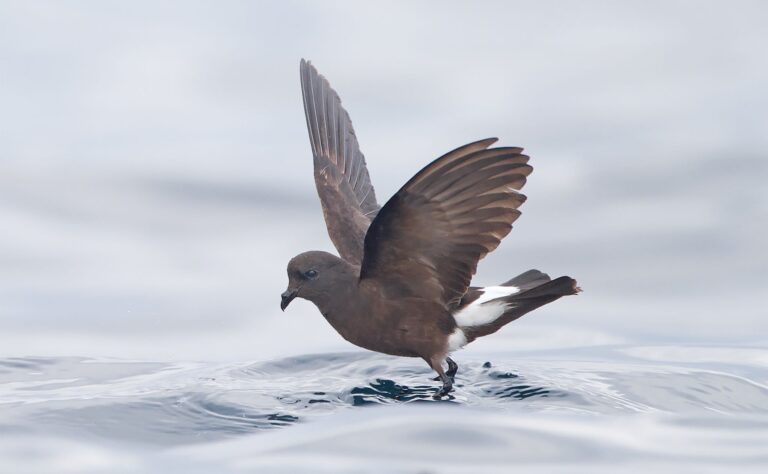
Albatrosses are the largest flying seabirds and the greatest gliders on Earth. The wandering albatross has the longest wingspan of any living bird, up to 11.5 feet (3.5 m), and weighs up to 26 lbs (12 kg). The smaller albatrosses known as mollymawks, like the one pictured, still span 6-8 feet (1.8-2.4 m).
Their long, narrow wings lock at the shoulder, so an albatross can soar for hours without a single flap, riding the wind just above the waves in a technique called dynamic soaring. Tube-shaped nostrils on the bill give the family its name, the tubenoses, and house a salt gland that lets them drink seawater. They also have an excellent sense of smell for finding food across miles of open ocean.
Albatrosses are extraordinarily long-lived. A Laysan albatross named Wisdom was still raising chicks in her seventies.
Most of the 22 albatross species live in the windy Southern Ocean, circling Antarctica and ranging north to the coasts of South America, southern Africa, Australia and New Zealand. Three species live in the North Pacific, and one, the waved albatross, breeds on the Galapagos Islands.
They spend most of their lives at sea and come to land only to breed, on remote, windswept islands.
Albatrosses eat squid, fish and krill, mostly snatched from the surface, and they will scavenge dead animals and follow fishing boats for scraps. Some species make shallow dives. They can fly hundreds of miles on a single feeding trip to bring food back to a chick.
Albatrosses pair for life and renew their bond with elaborate dances of bill-clacking, sky-pointing and wing-spreading. Young birds spend years perfecting the dance before they settle down.
A pair raises a single chick, and in the larger species the chick takes nine months to fledge, so parents breed only every other year. Young albatrosses may stay at sea for five years or more before first returning to land.
The albatross family Diomedeidae has 22 species in four groups: the great albatrosses (wandering and royal), the mollymawks, the North Pacific albatrosses and the sooty albatrosses.
They are among the most threatened families of birds: the IUCN lists 15 of the 22 species as Vulnerable, Endangered or Critically Endangered. The biggest killer is longline fishing, where birds drown after grabbing baited hooks, along with introduced mice, rats and cats on breeding islands and plastic fed to chicks by mistake. Simple fixes such as bird-scaring lines and night setting of hooks have cut deaths sharply where they are used.