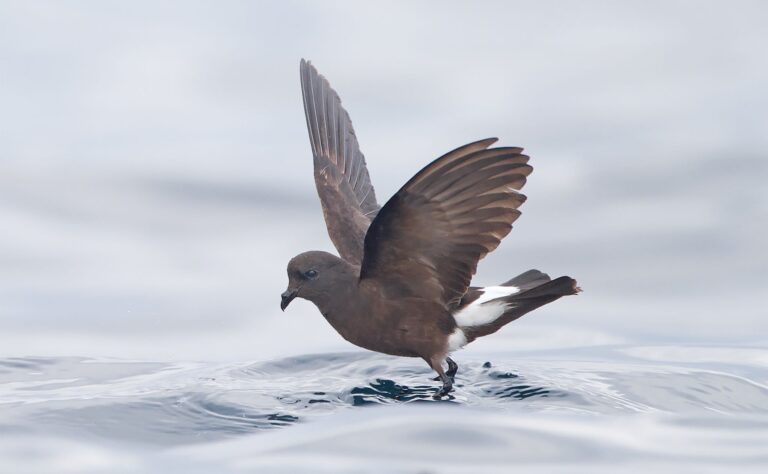
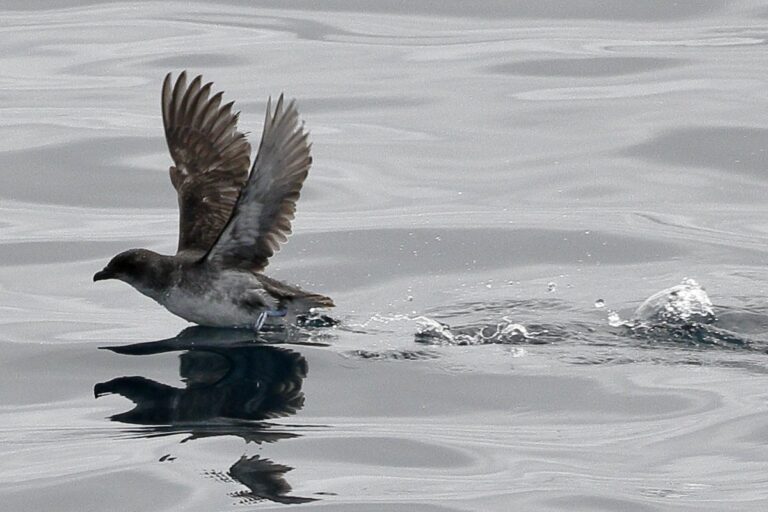
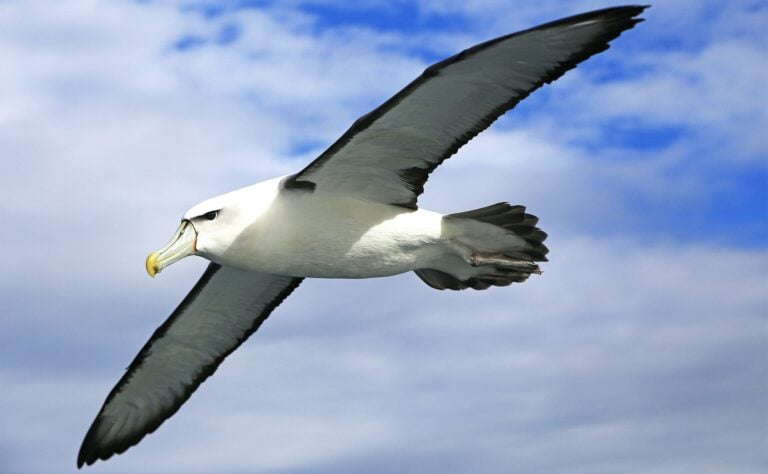
The petrel family holds about 90 species of ocean wanderers: petrels, shearwaters, fulmars and prions. They range from the prions, 10 inches (25 cm) long, to the giant petrels, nearly 3 feet (90 cm) long with a 6.5-foot (2 m) wingspan. The Cape petrel pictured, with its bold black-and-white checkerboard, is 15 inches (39 cm) long with a wingspan of 34 inches (86 cm).
All share the tube-shaped nostrils of the albatrosses, which house a salt gland and give them a sharp sense of smell for finding food and their own burrows. Many species have a distinct musky scent.
Fulmars and several petrels defend themselves by spitting a foul-smelling stomach oil that mats a predator's feathers.
Petrels and shearwaters live on every ocean, from the Arctic to the Antarctic, with the greatest variety in the Southern Ocean. They breed on islands and remote coasts, nesting in burrows, rock crevices or on cliff ledges, and most visit their colonies only at night.
They eat krill, squid, small fish and carrion picked from the surface or caught on shallow dives; some shearwaters swim down more than 200 feet (60 m) with their wings. Giant petrels are the vultures of the Southern Ocean, feeding on dead seals and penguins, and many species follow fishing boats for waste.
Petrels and shearwaters are among the greatest travellers on Earth. Sooty shearwaters fly a figure-of-eight around the whole Pacific each year, covering 40,000 miles (64,000 km), and Manx shearwaters have flown home from thousands of miles away after being moved by scientists.
Each pair raises a single chick, which may be left alone in the burrow for days while the parents forage far at sea. Many species return to nest within feet of where they hatched.
The family Procellariidae includes the fulmars, giant petrels, gadfly petrels, prions, shearwaters and the Cape petrel (Daption capense), which the IUCN lists as Least Concern. Many relatives are not so fortunate: dozens of petrels and shearwaters are threatened, several Critically Endangered.
Introduced rats, cats and pigs eating eggs and chicks on nesting islands, deaths on longline and trawl fisheries, and fledglings grounded by city lights are the main threats. Removing invasive predators from islands has brought several species back from the brink.