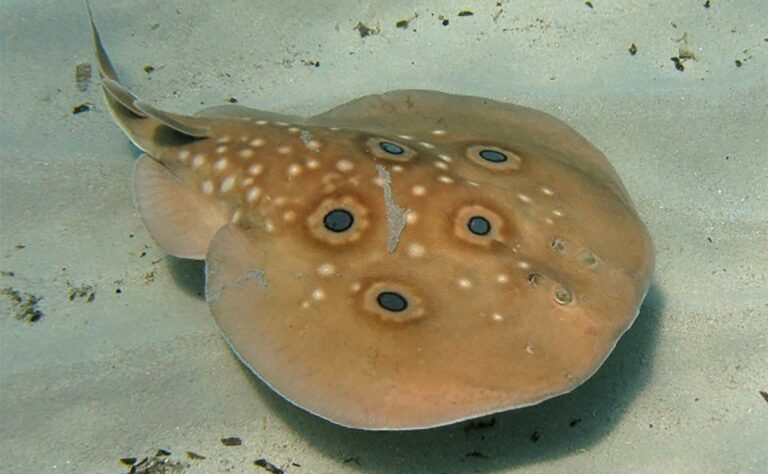
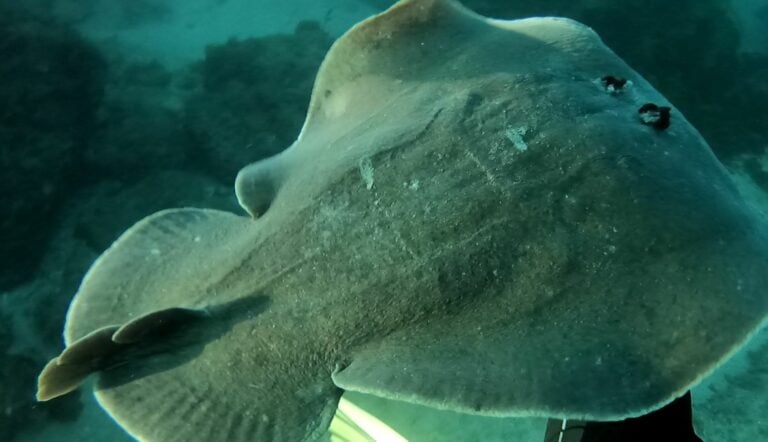
Numbfishes are small electric rays with a rounded disc, a short snout and a stout tail with two dorsal fins. The lesser electric ray pictured is 10-24 inches (25-60 cm) long, sandy brown with darker rings and blotches. Two kidney-shaped electric organs in the disc produce a shock of 14-37 volts, enough to numb a hand but far weaker than the torpedo rays.
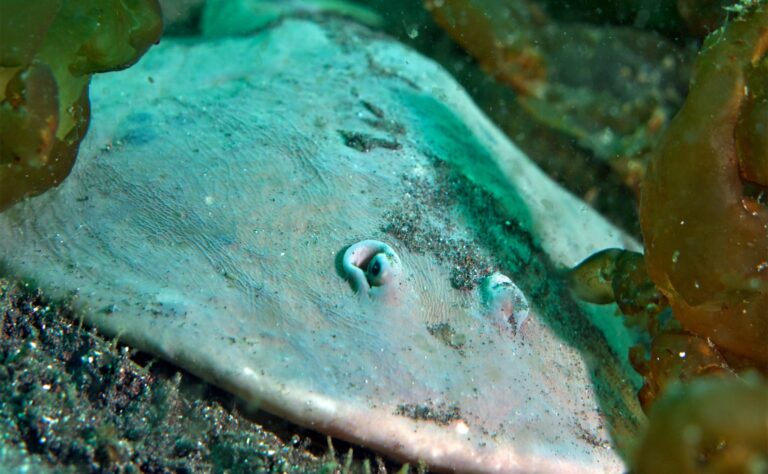
The name numbfish comes from the tingling numbness felt by anyone who steps on one. Their skin is soft and smooth, with no scales or thorns, and their small eyes sit just in front of the breathing spiracles.
Numbfishes live in warm, shallow coastal waters around the world. The lesser electric ray is found in the western Atlantic from North Carolina to Brazil, often in the surf zone of sandy beaches and in seagrass beds in water only a few feet deep. Other species live along the coasts of Africa, Asia and Australia, some down to 3,000 feet (1,000 m).
Numbfishes feed on small animals in the sand: worms, young crabs, shrimp, anemones and small snails, which they dig out with their snout and suck in with their small, protrusible mouth.
They spend most of the day buried in sand with just their eyes showing, and become more active at night. The electric shock is mainly for defence; when disturbed a numbfish may arch its back and deliver a series of pulses.
Females give birth to live young, usually four to fifteen pups, in the summer.
The numbfish family Narcinidae contains about 30 species. The IUCN lists the lesser electric ray (Narcine bancroftii) as Near Threatened; it declined sharply in the Gulf of Mexico in the 1970s and 1980s as bycatch in shrimp trawls and has recovered only partly since.