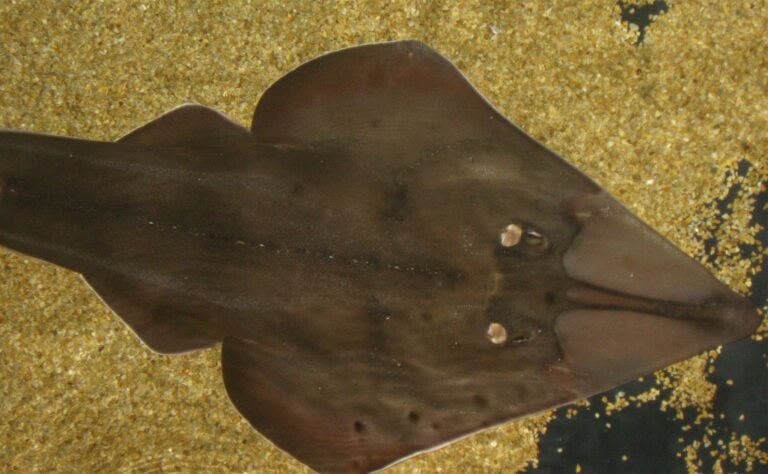
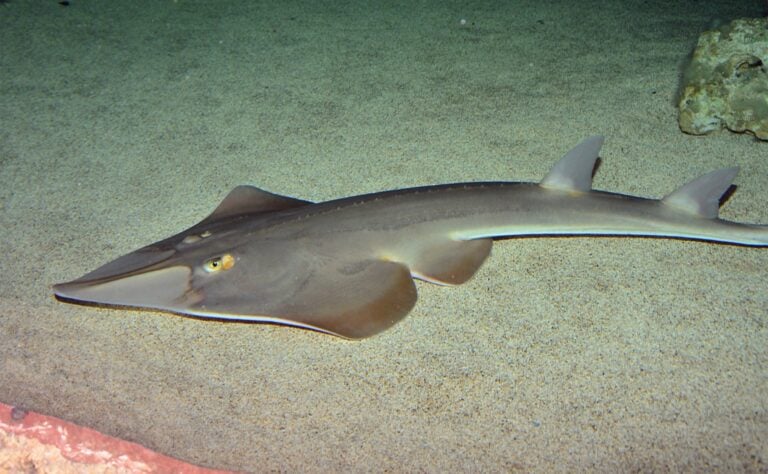
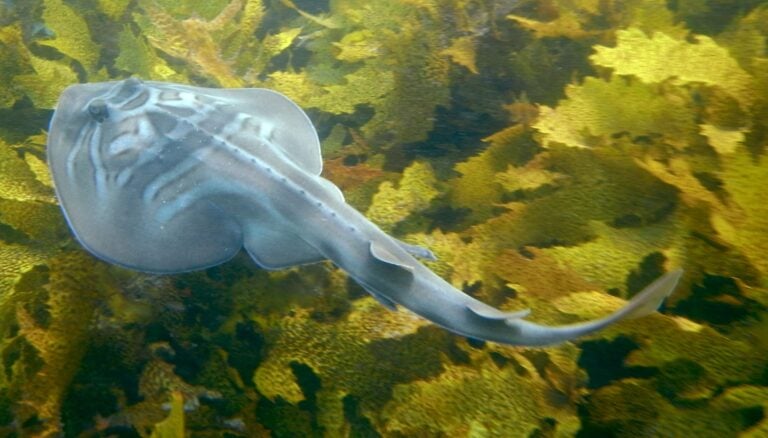
Sawfish are rays, not sharks, even though they have a shark-like body and swim with their tails. What sets them apart is the saw: a long, flat snout edged with a row of sharp teeth, which can make up a quarter of the animal's length. The largest species, the green sawfish, grows to 23 feet (7 m), making sawfish among the biggest fish in the sea.
The saw is packed with electrical sensors that detect the heartbeats of hidden prey, so it works as a detector as well as a weapon. The gills are on the underside of the body, which is one of the clues that sawfish are rays.
Sawfish can live for 30 years or more and do not breed until they are around 10.
Sawfish live in warm, shallow coastal waters, estuaries, mangroves and rivers across the tropics. The largetooth sawfish travels far up rivers and has been found in Lake Nicaragua, hundreds of miles from the sea. Northern Australia is now the most important stronghold for all five species, along with Florida in the United States.
Sawfish eat schooling fish, crabs, shrimp and other bottom animals. They swipe the saw sideways through a shoal to stun and injure fish, then pin them to the bottom and eat them, and they also rake the saw through sand to dig up buried prey.
Sawfish are most active at night and spend the day resting on the bottom. They are shy and avoid people, using the saw only to hunt or to defend themselves when caught.
Females give birth to live young, usually eight to twenty pups, whose saws are soft and covered by a sheath at birth so they do not injure the mother.
The sawfish family Pristidae has five species: the smalltooth, largetooth, green, dwarf and narrow sawfish. The IUCN lists all five as Endangered or Critically Endangered, and sawfish have vanished from more than half the countries where they once lived.
Their saws tangle fatally in fishing nets, their mangrove nurseries have been cleared, and their fins and saws have been traded as curios. The smalltooth sawfish was the first marine fish to be listed under the United States Endangered Species Act, in 2003.