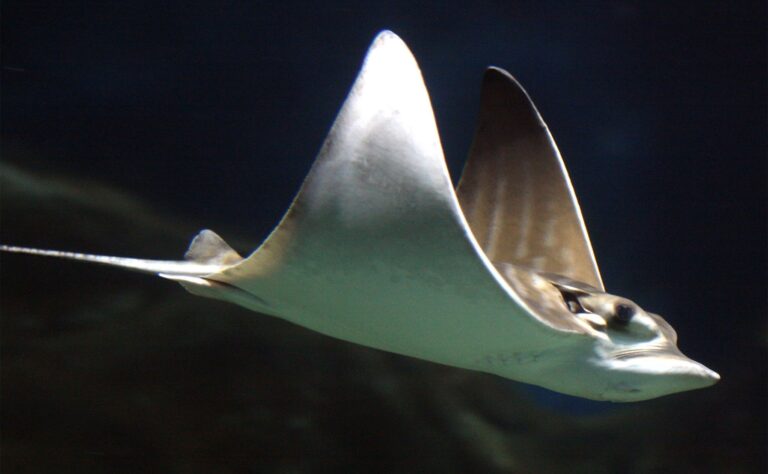
Manta rays are the largest rays in the world. The giant oceanic manta can measure 23 feet (7 m) from wing tip to wing tip and weigh 6,600 lbs (3,000 kg); the reef manta pictured reaches about 18 feet (5.5 m). Despite their size they are gentle filter feeders with no stinging spine at all.
Two fleshy lobes called cephalic fins unroll from the front of the head to funnel water into the wide mouth, which is why mantas were once called devil rays. Each manta has a unique pattern of spots on its white belly, which researchers use to identify individuals. Mantas have the largest brain of any fish.
They live for 40 years or more.
Mantas live in tropical and subtropical seas around the world. Reef mantas stay near coasts, coral reefs and islands, returning to the same cleaning stations and feeding grounds year after year. Giant mantas roam the open ocean and travel thousands of miles.
Famous places to see them include Hawaii, the Maldives, Indonesia, Mozambique and the Revillagigedo Islands of Mexico.
Mantas eat plankton: tiny crustaceans, krill, fish eggs and larvae strained from the water by comb-like plates on their gills. They feed by swimming with mouths open, sometimes looping in backward somersaults or lining up in chains to concentrate their food.
A large manta may filter more than 60 lbs (27 kg) of plankton a day.
Mantas visit cleaning stations on reefs where small fish pick parasites from their skin and gills. They are curious and often approach divers, and they sometimes leap clear of the water, perhaps to communicate or to shed parasites.
Females give birth to a single pup every two to five years after a pregnancy of about a year, one of the slowest breeding rates of any fish. In one experiment, mantas appeared to recognise themselves in a mirror, a sign of intelligence seen in very few animals.
There are two species, the giant oceanic manta (Mobula birostris) and the reef manta (Mobula alfredi), both now placed in the genus Mobula with the smaller devil rays. The IUCN lists the giant manta as Endangered and the reef manta as Vulnerable.
Mantas are killed for their gill plates, sold as a supposed medicine, and drown in fishing nets. Because they breed so slowly, populations recover very slowly. Both species are protected under international trade rules, and manta tourism is now worth far more than manta fishing.